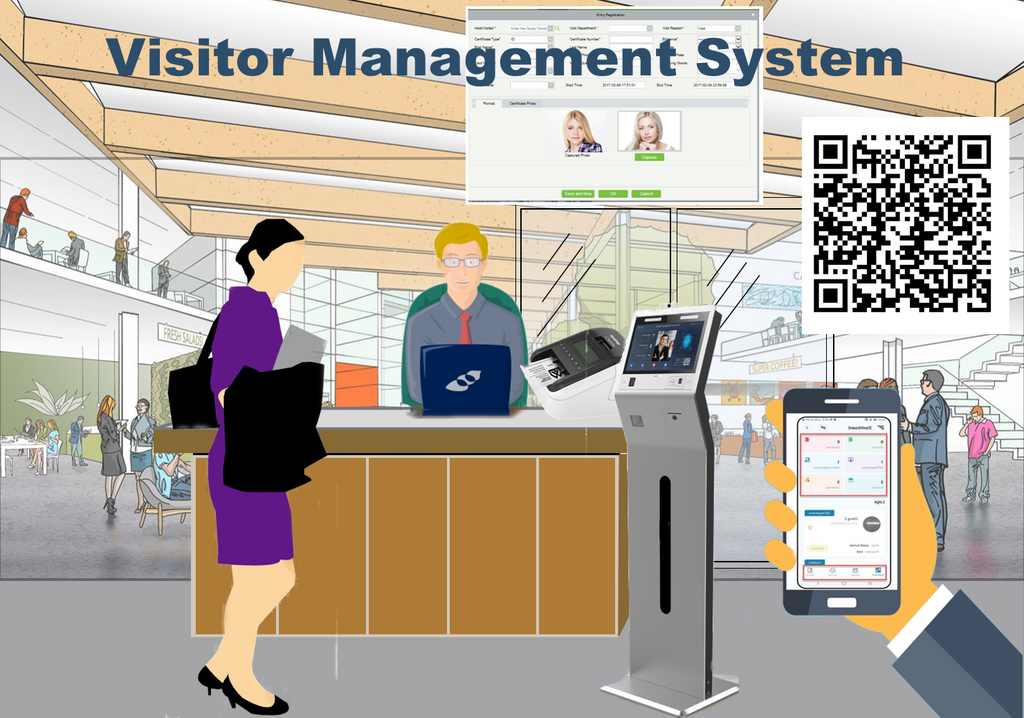
If you’re looking into visitor management software, you’re likely trying to solve a simple problem: how to manage visitors efficiently while keeping your workplace secure and running smoothly.
Visitor expectations and workplace requirements have changed. Today, teams need to balance security, compliance, and a seamless guest experience, all without adding more manual work. In this post, we’ll break down the key benefits of a visitor management system (VMS) and how to tell if it’s the right fit for your organization.
What is a visitor management system?
A VMS is software that helps organizations register, track, and manage visitors. Modern systems extend beyond the front desk, enabling organizations to manage the entire visitor journey before arrival, including pre-screening, approvals, and secure access provisioning, making it easier to manage guests at scale while maintaining visibility, security, and compliance.
How to tell if your business needs a visitor management system?
Visitor volume has increased and is harder to manage
You need stronger security or screening protocols
Compliance or audit requirements are becoming more demanding
You want better visibility into who is onsite at any given time
If any of these sound familiar, a visitor management system can help streamline operations and reduce risk.
What are the benefits of a visitor management system?
A VMS helps workplace and security teams reduce manual work, improve physical security, and create a more consistent visitor experience across locations.ents, such as NDAs, safety acknowledgments, or compliance forms.

UN: admin PW: admin123
UN: admin PW: admin123admin123
Payroll is the systematic process by which a business compensates its workers, encompassing the calculation of wages, tracking of hours, and distribution of pay. It also ensures compliance with labor laws by managing tax withholdings, statutory contributions, and detailed recordkeeping.

UN: admin PW: admin123admin123
Accounting is the process of recording, summarizing, analyzing, and reporting a business's financial transactions. Often called the "language of business," it allows leaders to measure financial health, ensure legal compliance, and make informed strategic decisions.
UN: admin PW: admin123
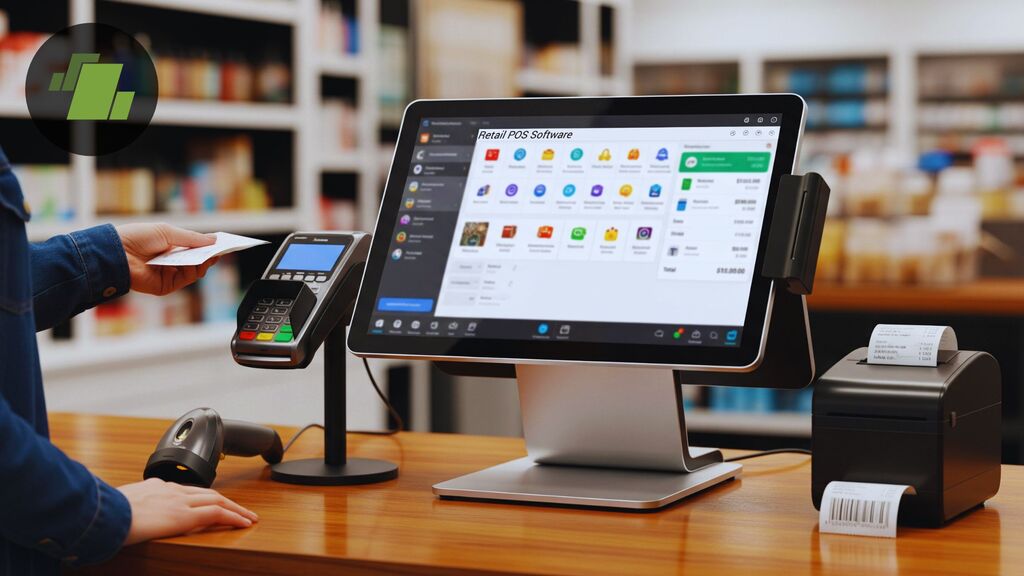
A Point of Sale (POS) and inventory system unifies front-end sales with back-end stock tracking. Every time a sale is made, the system automatically subtracts the item from your inventory in real-time, helping you avoid out-of-stocks, prevent shrinkage, and manage purchase orders directly.
PROMOTIONAL VIDEO
USER NAME:: 1111@gmail.com PASSWORD: 1232
Email us the following (Soft copy only).
Other Projects
FOSS Consulting Services Proposal
Prepared for: [Client / Company Name]
Prepared by: [Your Name / Consulting Company]
Date: [Date]
Proposal Valid Until: [Date]
1. Executive Summary
We propose to provide professional FOSS consulting services focused on identifying suitable open-source solutions, evaluating the client's existing technology environment, reducing unnecessary software licensing costs, improving flexibility, and establishing sustainable open-source practices.
Our approach combines technical assessment, solution recommendations, implementation guidance, documentation, knowledge transfer, and ongoing support. The goal is to help Empowerlink Solutions adopt open-source technologies that are technically appropriate, secure, maintainable, and aligned with its business requirements.
2. Understanding of the Client's Needs
Organizations increasingly use open-source technologies to reduce vendor dependency, improve flexibility, and gain greater control over their technology environment.
However, adopting open-source software without proper technical evaluation can create challenges involving:
Our consulting engagement will address these areas and provide a practical roadmap for successful FOSS adoption.
3. Project Objectives
The primary objectives of this engagement are to:
4. Proposed Scope of Work
Phase 1 – Discovery and Assessment
We will conduct an initial assessment of the current environment, including:
Deliverable: Current-State Assessment Report
Phase 2 – FOSS Opportunity Assessment
We will identify areas where open-source solutions may provide suitable alternatives.
Potential areas may include:
Each candidate solution will be evaluated according to:
Deliverable: FOSS Opportunity and Technology Assessment
Phase 3 – Solution Architecture
For selected technologies, we will develop recommended technical architectures covering:
Deliverable: Proposed FOSS Architecture and Solution Design
Phase 4 – Proof of Concept
Where appropriate, we will conduct a Proof of Concept (POC) to validate selected technologies before production implementation.
The POC may include:
Deliverable: Proof-of-Concept Report with Findings and Recommendations
Phase 5 – Migration and Implementation Planning
We will develop a practical migration plan covering:
Deliverable: FOSS Migration and Implementation Roadmap
Phase 6 – Knowledge Transfer and Training
We will provide knowledge-transfer sessions for the client's technical team.
Training may include:
Deliverable: Training Materials and System Administration Documentation
5. Key Deliverables
At the completion of the engagement, the client will receive applicable versions of:
Deliverable | Description |
Current-State Assessment | Review of existing technology environment |
FOSS Assessment | Recommended open-source opportunities |
Technology Comparison | Evaluation of potential solutions |
Solution Architecture | Proposed technical architecture |
Proof of Concept | Validation of selected technologies |
Migration Roadmap | Phased implementation plan |
Risk Assessment | Technical and operational risks |
Documentation | Configuration and operational documentation |
Training | Knowledge-transfer sessions |
Final Recommendations | Summary and next steps |
6. Proposed Methodology
Our consulting methodology follows five practical stages:
Discover → Assess → Design → Validate → Implement
Discover
Understand the client's business objectives, technical environment, constraints, and priorities.
Assess
Evaluate existing systems and identify suitable FOSS opportunities.
Design
Develop the target architecture and implementation strategy.
Validate
Use proof-of-concept activities and testing to validate important technical decisions.
Implement
Support migration, deployment, documentation, and knowledge transfer.
This approach reduces implementation risk by validating important technical decisions before large-scale deployment.
7. Project Timeline
The estimated engagement duration is [X weeks], depending on the size and complexity of the client's environment.
Phase | Estimated Duration |
Discovery & Assessment | 1–2 weeks |
FOSS Opportunity Assessment | 1–2 weeks |
Architecture & Solution Design | 1–2 weeks |
Proof of Concept | 1–3 weeks |
Migration Planning | 1 week |
Training & Knowledge Transfer | 1 week |
Final Recommendations | 2–3 days |
A detailed project schedule will be prepared after the initial discovery session.
8. Client Responsibilities
To ensure successful delivery, the client will provide:
All access will be handled according to the client's security policies.
9. Commercial Proposal
Option A – FOSS Assessment
Fee: [Amount]
Includes:
Option B – FOSS Consulting & Implementation
Fee: [Amount]
Includes everything in Option A, plus:
Option C – Ongoing FOSS Advisory
Fee: [Amount / Month]
Includes:
Final pricing will be confirmed after the initial discovery and assessment because the required scope will depend on the client's existing environment.
10. Assumptions and Exclusions
Unless specifically included in the final Statement of Work, the following are excluded:
Additional requirements can be incorporated through an agreed change request.
11. Why FOSS Consulting
Our consulting approach focuses on selecting technology based on business requirements and technical suitability, rather than recommending open-source software simply because it is free.
We consider:
The objective is to help the client make informed technology decisions while maintaining control over its IT environment.
12. Success Criteria
The engagement will be considered successful when:
13. Next Steps
Upon acceptance of this proposal, the following steps are recommended:
14. Acceptance
Client: [Client / Company Name]
Authorized Representative: __________________________
Position: __________________________________________
Signature: _________________________________________
Date: _____________________________________________
Consultant: [Your Name / Company]
Authorized Representative: __________________________
Signature: _________________________________________
Date: _____________________________________________
OUR SERVICE
since there is no need to retype the name and address of residents, printing of certificates and permit only take an average of 5 minutes.
only registered users from COMELEC , this will prevent flyimg voters get certificates and permits.
the Barangay System is easy to use with minimum user training.
OUR PROCESS
The objective of this record management system is to digitized most of its records to complement and support Sec. 394 d. (6) of R.A.7160, THE LOCAL GOVERNMENT CODE OF THE PHILIPPINES by providing a more efficient processing of information for private and public stakeholders. Sensitive records are secured under a semi-cloud base management system for easy retrieval, updating, archiving and classification of data and information.
Comprehensive Windows desktop application for barangay officials. Manage records, process documents, generate reports, and oversee all barangay operations from a centralized system.
Access barangay services anytime, anywhere through our mobile application. Submit requests, track applications, and receive notifications directly on your smartphone.
Barangay Clearances
Issuance of barangay clearance, certificate of indigency, or certificate of residency for residents' official transactions.
Business Permits
Application and renewal of barangay business permits for local establishments and entrepreneurs.
WHY US
Years Experience
Professional Team
Client Satisfication
Our commitment creates trustworthiness and excellence.
Small Barangay < 5,000 Voters Php 150k
Medium Barangay > 5,000 < 20k Voters Php 200k.
Large Barangay > 20,000 Voters Php 250k
Note : Payment starts when the Barangay System is fully tested by the Barangay Captain and Officials.
FAQ
The Barangay Management System is a vital step toward building a faster, more transparent, and trustworthy government service across the Philippines. By embracing a computerized system, we can modernize local governance and bring real progress where it matters most - in our barangays. This system will allow every barangay to efficiently manage records, update family profiles in real time, and strengthen identification of residents in their communities. It promotes accountability, faster response, and better decision-making. When people experience these changes at the barangay level, trust in government begins to grow — and from there, transformation will spread throughout the nation. We have the courage to start this change now. Let us work together to make every barangay connected, informed, and empowered through the Barangay Management System - the foundation of a modern and responsive Philippines.
Government & Private Sector
Pricing Starts at:
Payroll System
Php. 50K
HR System
Php. 50K
Accounting System
Php. 75K
POS System
Php. 50K
Yes we can schedule tutorial using video chat using messenger.
Yes. You can email or call us your concerns and expect immediate response.


Elmo S. Sadiang-abay
CEO / President
Bachelor of Science in Commerce - Studied in Notre Dame of Marbel University, Koronadal South Cotabato Philippines.
Entrepreneurial Management – Completion Certificate from Trainors Technology International Inc. in Riyadh, Kingdom of Saudi Arabia.

CTO Chief Technology Officer
Senior Software Developer. Studied in UPLB. Lives in Pagsanjan. From Calamba, Laguna.

Aries Andres
Software Engineer
Studied in Calamba Community College. From Canlubang, Laguna.

Glenn M. Azuelo
LAMP Stack Developer (CodeIgniter)
Studied at University of St. La Salle - Bacolod. Lives in Visayas.
OUR BLOG
The Philippines is advancing its digital transformation through key legislation like the E-Governance Act (RA 12254), which aims to digitize government processes and the Philippine Digital Workforce Competitiveness Act (RA 11927). These laws prioritize improved public services, digital literacy, and stronger cybersecurity through secure, integrated networks.
Key Digitalization Laws and Acts
E-Governance Act of 2025 (RA 12254): Mandates a nationwide digital transformation, requiring all government agencies and local government units (LGUs) to integrate their systems. It promotes online citizen-centered services and enables public-private partnerships to enhance digital infrastructure, particularly in underserved areas.
Philippine Digital Workforce Competitiveness Act (RA 11927): Focuses on strengthening the skills of the Filipino digital workforce, establishing an Inter-Agency Council, and creating shared service facilities for freelancers and digital professionals.
Data Privacy Act of 2012 (RA 10173): Governs the protection of personal data in both government and private sector digital systems, ensuring safe data processing.
Public Telecommunications Policy Act (RA 7925): Governs the development of telecommunications infrastructure, supporting connectivity initiatives.
Key Components and Objectives
Digital Transformation: The Senate Approves E-Governance Act on Final Reading indicates a major shift towards a "digitally empowered and integrated government," aiming to make transactions faster and more transparent, according to Republic Act No. 12254.
Digital Workforce Support: Republic Act No. 11927 fosters a competitive workforce through digital literacy programs and specialized training.
Infrastructure Enhancement: The Senate Approves E-Governance Act on Final Reading outlines the creation of an "Integrated Government Network," connecting all agencies for seamless communication.
CUSTOMER STORIES
Punong Barangay
4.5
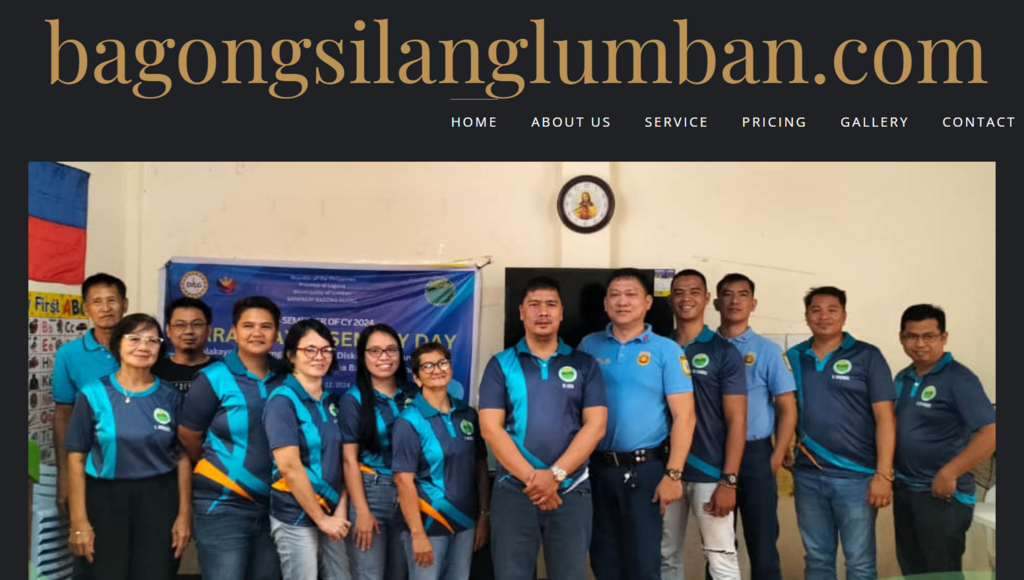
As the Punong Barangay I'm very satisfied with our website https://bagongsilanglumban.com/
For Inquiry Email: n.lizo@yahoo.com
Contact No.: 09558259059
Phase 1, Dona Romna Subd., Binan, Pagsanjan
Globe: 639272505725
EmpowerLink Solutions Inc.
Copyright 2026 empowerlinksolution.com Web Design by E.U.Salazar